From Calling Cards to Conversation Starters
Learn how calling cards served as social introductions and what their history can teach about beginning a conversation with less pressure and more care.
The common mistake with conversation starters is treating them as lines to deliver, which can make a friendly exchange feel rehearsed. Calling cards offer a different lesson: in some social settings, a card could identify a visitor or carry a brief message, but its meaning depended on local custom. The useful idea is not to revive that etiquette; it is to notice how a small, familiar ritual can make an introduction easier.
Calling cards marked a visit, not a conversation
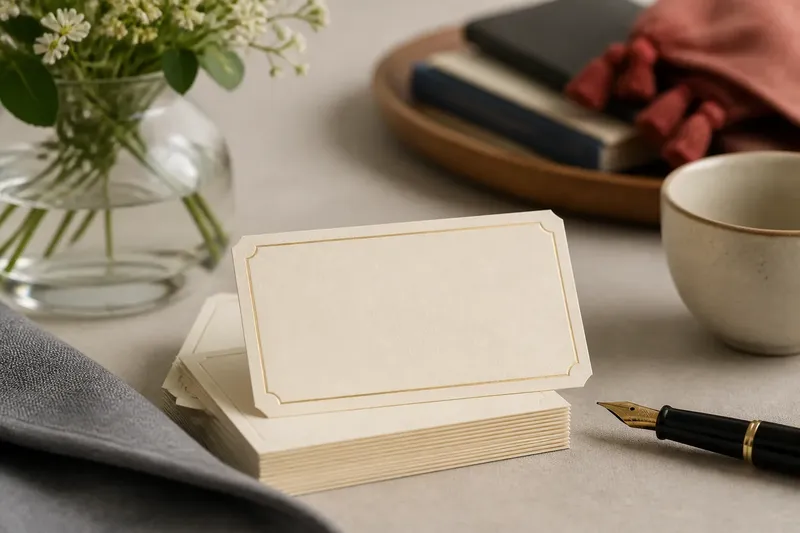
A calling card was a printed card bearing a person’s name, used in some places and periods around social visits and introductions. Practices varied, so it is better not to treat one description as a universal rule. A card might identify a caller or convey a brief message, but it could not determine what the people involved said next.
That distinction matters. The card provided a recognizable social cue: someone had arrived, called, or left a message. It helped establish the occasion without scripting the exchange. Today, the relevant parallel is not a particular object but the function of a cue: it can make a first move feel more ordinary without obliging anyone to continue.
Use a familiar ritual rather than a prop
Modern conversation does not need a special object to imitate a calling card. In many settings, a simple greeting or a brief acknowledgment of the occasion is enough: “Good to see you at the meeting” or “I’m glad we both made it to the reading.” These openings work because they name the shared situation rather than asking someone to explain a possession or disclose something personal.
Before speaking, consider whether the moment invites a greeting. At a community meeting, people may be settling in; at a reception, introductions may be expected. If the other person is already talking with someone, wearing headphones, or focused on a task, waiting for a more suitable pause is usually more considerate than trying to find a clever opening.
It is not worth carrying special props or memorizing a list of polished lines. That preparation can make a brief social exchange feel like a performance. A clear greeting, delivered at a reasonable moment, is usually enough to begin.
Make the first move easy to answer
A useful opener gives the other person a simple way to respond. At a book-club gathering, you might say, “Hi, I’m Jordan. Have you been to this group before?” The question is tied to the shared event, and the other person can answer briefly or add more if they wish.
Say you arrive at a neighborhood committee meeting and recognize someone from the sign-in table. You say, “Hi, I’m Lee. I think we were both at the garden meeting last month.” If they respond warmly, you can ask what brought them to this meeting; if they give a brief greeting and turn back to their papers, you can wish them a good meeting and let them prepare. The starting point is a shared occasion, the action is a short introduction, and the observable result guides whether you continue.
Keep the opening proportional to the setting. A quick greeting suits a hallway; a longer introduction may fit a reception where people are mingling. The aim is not to extract a lively response but to make mutual recognition possible.
Read the response without trying to decode it
After an opener, notice whether the other person answers, asks something back, or signals that they need to return to what they were doing. These are practical cues for choosing your next move, not proof of what the person thinks or feels.
- They answer and ask you something. If they do, answer plainly and continue with a related topic; if they do not, keep your reply short and allow the exchange to pause.
- They give a brief answer while looking at their work. If they remain focused, say something courteous such as “I’ll let you get ready”; if they turn toward you and add a detail, respond to that detail.
- They mention an appointment or someone they are waiting for. If they need to leave, wish them well and stop; if they remain available, let them choose whether to add more.
- They seem unsure who you are. If they do not recognize you, give a concise reminder of where you met; if the connection is still unclear, avoid pressing them to remember.
- They introduce you to someone else. If the introduction is clear, greet the new person and let the group set the pace; if the moment feels busy, keep the exchange brief.
- They do not respond at once. If they are occupied or may not have heard, wait rather than repeating yourself immediately; if they turn away or continue their task, leave them to it.
What should you say after an introduction?
Should I ask how someone knows the host?
Ask only if the setting makes the question natural and the answer is likely to be easy to give. At a small gathering, it may help establish a connection; at a busy event, a simple greeting can be enough.
What if I forget someone’s name?
Ask politely rather than pretending to remember. A brief “I’m sorry, could you remind me of your name?” is clear and gives the person a straightforward way to answer.
How can I end a short exchange politely?
Use a simple closing tied to the moment, such as “I’ll let you get back to the meeting” or “Enjoy the reading.” Then turn your attention elsewhere instead of adding another question.
Is a short response a sign that I should try harder?
No single response tells you why someone is brief. Treat it as a reason to avoid pressing for more, and leave room for them to continue if they choose.
Let the social cue do only its small job
Calling cards belonged to particular customs, and their precise use varied across settings and periods. Their limited lesson for conversation starters is that a recognizable cue can make an opening feel less abrupt. A greeting, an introduction, or a reference to the shared occasion can serve that purpose today. The conversation still depends on whether both people choose to take it further.
For a low-pressure conversation starter, keep the first move clear, relevant to the occasion, and easy to answer. Then pay attention to the response you can actually observe: an invitation to continue, a polite pause, or a return to the task at hand.